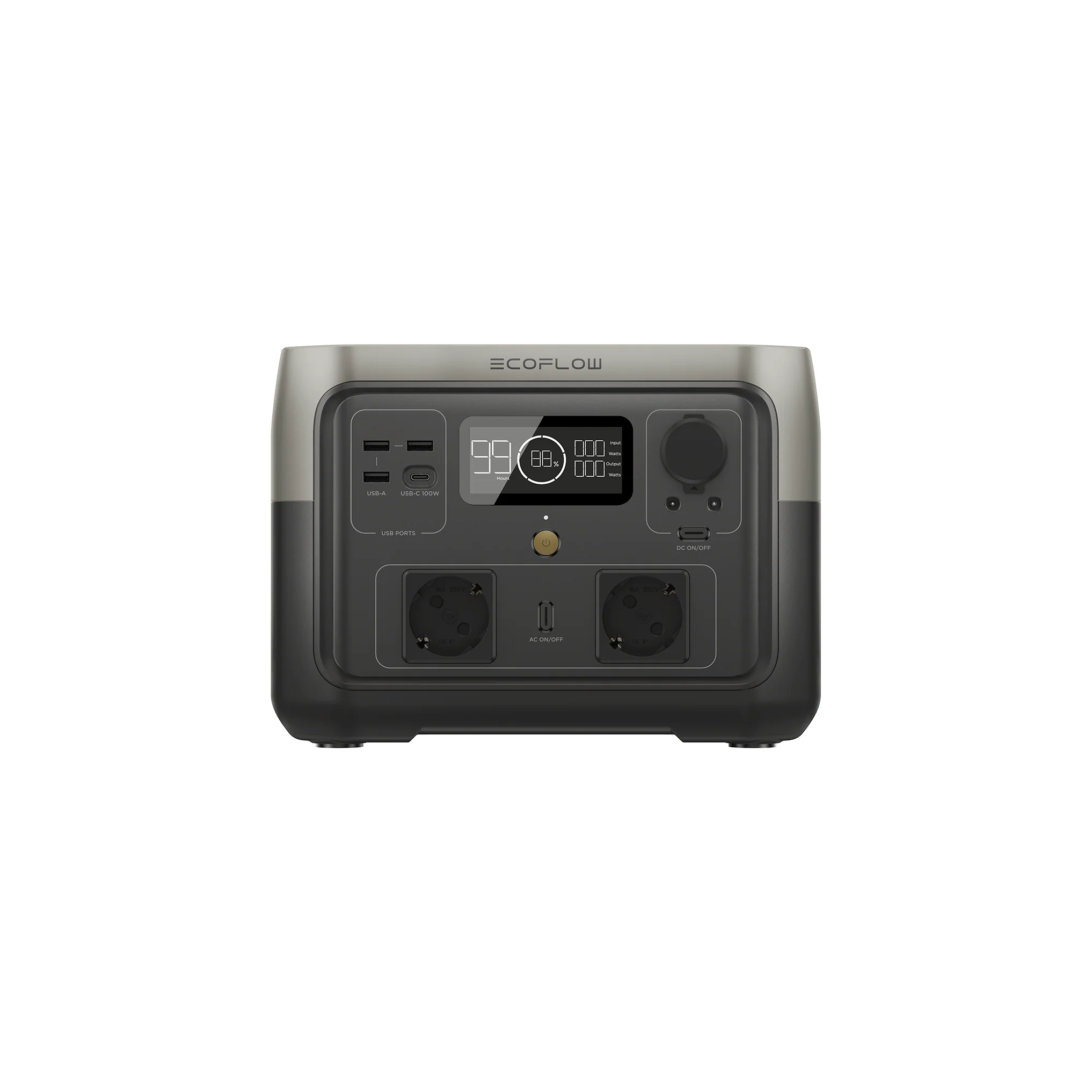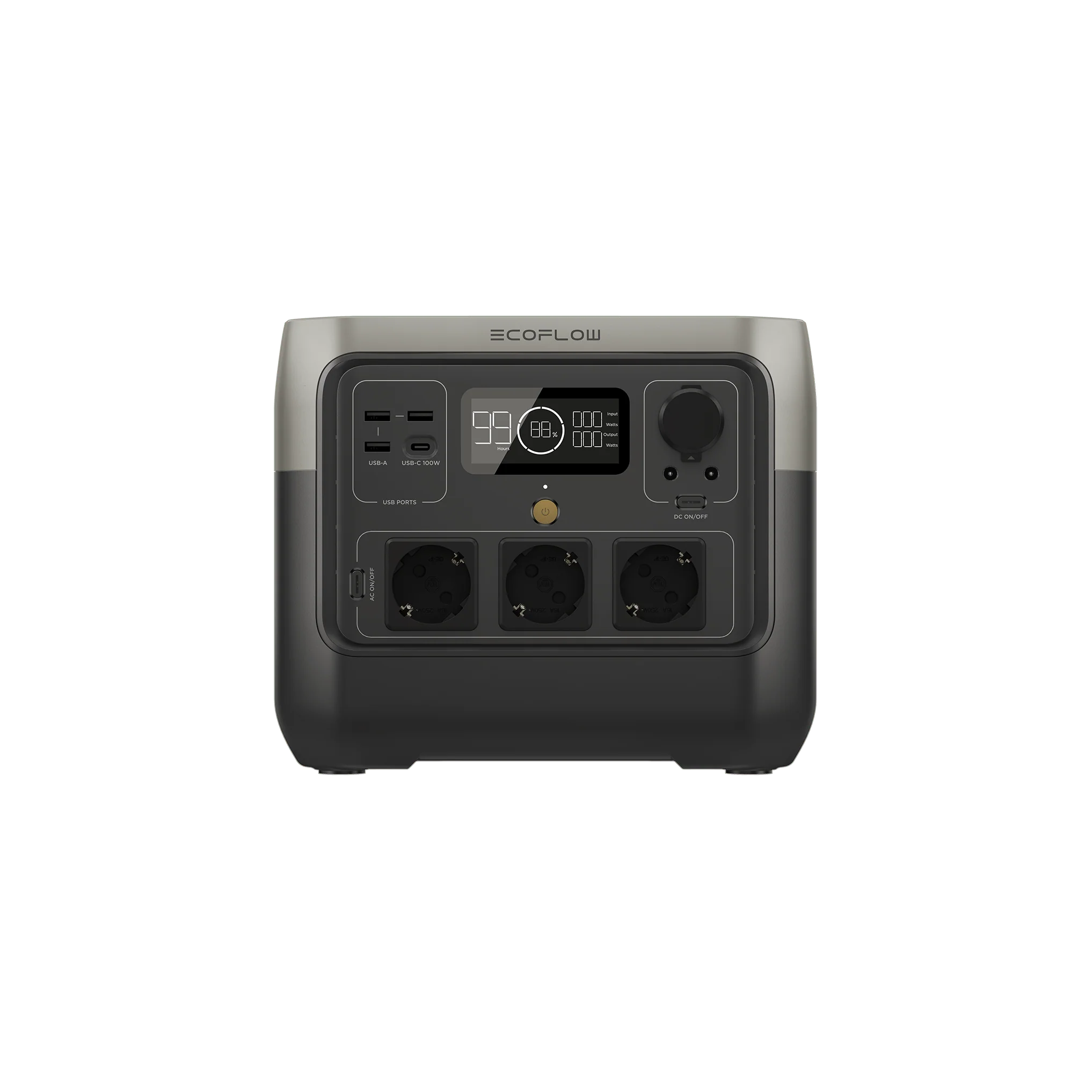
EcoFlow RIVER 2 Pro — Compact
EcoFlow RIVER 2 Pro EFR620
Compact F1 · Outlet-sized (up to 1 kWh)

EcoFlow EcoFlow RIVER 2 Pro

Estimated price range
450–1000 € ≈ $486–$1,080
An editorial estimate, not a selling price

JouleSpecs does not sell and does not show shop prices: check the price where you buy.

Where to buy

Check the price on Amazon

Paid link: the price for you does not change.

As an Amazon Associate I earn from qualifying purchases.

Sheet on the EcoFlow website →
Add to my system
Data from official source

EcoFlow RIVER 2 Pro is a lithium iron phosphate power station that sits between a backpack and a van: roomier than a day-trip unit, light enough for one person to move alone. It handles a camping fridge, a small tool, the equipment for a day of work away from the grid.

Plugged into the outlet it acts as backup, but the switch to the battery leaves a gap of about thirty milliseconds: lights and the modem don't notice, a computer might. To start a motor or a heating element that needs more than its continuous rating, there's a dedicated function that raises the ceiling for a moment.

It charges from the outlet, the sun, the car or USB-C, and from the grid it's back to nearly full in under an hour: the difference between waiting until the next morning and getting going right away. It's controlled from the buttons on the panel, and the app is for checking on it from a distance, not for making it work.

01 · Verified data

Technical specifications

Cell chemistry LFP (lithium iron phosphate)
Continuous output 800 W
Cost per kWh 714,84 €/kWh

official manufacturer list price — on nominal capacity

Round-trip efficiency EcoFlow does not state it.

where we looked

Standby consumption EcoFlow does not state it.

where we looked

Parameter Value Source
Weight 7.8 kg (17.2 lb) manufacturer website
Nominal capacity 0.768 kWh Declared by the brand
Cell chemistry LFP (lithium iron phosphate) Declared by the brand
Continuous output 800 W Declared by the brand
Peak output 1600 W Declared by the brand
Fastest USB-C 100 W Declared by the brand
Maximum charge power 0.94 kW Declared by the brand
0–80% charge time 56 min Declared by the brand
Maximum solar input 220 W Declared by the brand
Backup power EPS (brief interruption) Declared by the brand
Switchover time 30 ms Declared by the brand
Rated cycles 3000 cicli Declared by the brand
Capacity at end of cycle life 80 % Declared by the brand
Warranty 5 anni Declared by the brand
Mounting Portable Declared by the brand
Official list price 549 € Declared by the brand
Usable capacity — Not declared
Depth of discharge — Not declared
Cell supplier — Not declared
Expandable — Not declared
Maximum expanded capacity — Not declared
Peak duration — Not declared
AC outlets — Not declared
Guaranteed throughput — Not declared
Guaranteed remaining capacity — Not declared
Round-trip efficiency — Not declared
Standby consumption — Not declared
Ingress protection — Not declared
Minimum temperature — Not declared
Maximum temperature — Not declared
Cell heating — Not declared
Noise level — Not declared
Wheels and handle — Not declared
Works without internet — Not declared
Local control — Not declared
Open protocols — Not declared
Home Assistant integration — Not declared
Where the data is hosted — Not declared
Remote updates — Not declared
App required for setup — Not declared
Declared standards — Not declared

Which documents this page rests on

The rest of the data comes from 2 pages on the manufacturer's site, cited row by row in the table above.

A manual or a datasheet counts as a source even when the original file is hosted elsewhere: what matters is the document, not the server. Where that happens, it is stated above.

02 · The numbers

What it really costs

Cost per kWh 714.840 €/kWh official manufacturer list price — on nominal capacity
How we worked it out
price
549
nominal capacity
0.768
Battery life cycles 1825 cycles warranty years
  • the manufacturer does not state the guaranteed total energy throughput, which for heavy users is often the limit that runs out first
How we worked it out
stated cycles
3000
warranty years
1825
Cost of stored energy 0.392 €/kWh warranty years
  • the manufacturer does not state the guaranteed total energy throughput, which for heavy users is often the limit that runs out first
  • on nominal capacity: the manufacturer does not state the usable figure, so the real cost is higher
  • without conversion losses, which the manufacturer does not state: the real cost is higher
How we worked it out
price
549
nominal capacity
0.768
battery life cycles
1825
round-trip efficiency
100
energy delivered over the whole life
1402
Energy density 98.500 Wh/kg
  • on nominal capacity: the manufacturer does not state the usable figure, so the true number is lower
How we worked it out
nominal capacity
0.768
weight
7.800
Power-to-capacity ratio 1.040 C
  • on nominal capacity: the manufacturer does not state the usable figure, so the true number is lower
How we worked it out
continuous power
800
nominal capacity
0.768

These numbers are calculated, not stated: they have no source to cite, they have a formula you can redo. The price used is the manufacturer's list price, which is stable and the same in every country — not a shop's price on the day.

03 · Summary

Pros and cons

In favour

  • From the grid it's back to nearly full in under an hour: no waiting to get going again.
  • It starts a motor or a heating element that needs more than its continuous rating.
  • It also charges from the sun and the car's outlet: away from home it doesn't depend on a single outlet.
  • It handles a camping fridge while staying a weight one person can move alone.

Worth knowing

  • The switch to the battery leaves a gap of about thirty milliseconds: for equipment that can't tolerate it, it isn't the right choice.
  • Only one AC outlet: two plug-in appliances together need a power strip. source
If not this one

Alternatives in the catalogue

Chosen by the declared use tier and footprint, not by price: we don't publish prices.

Updates to this sheet and Manufacturer Notes
  1. Price updated