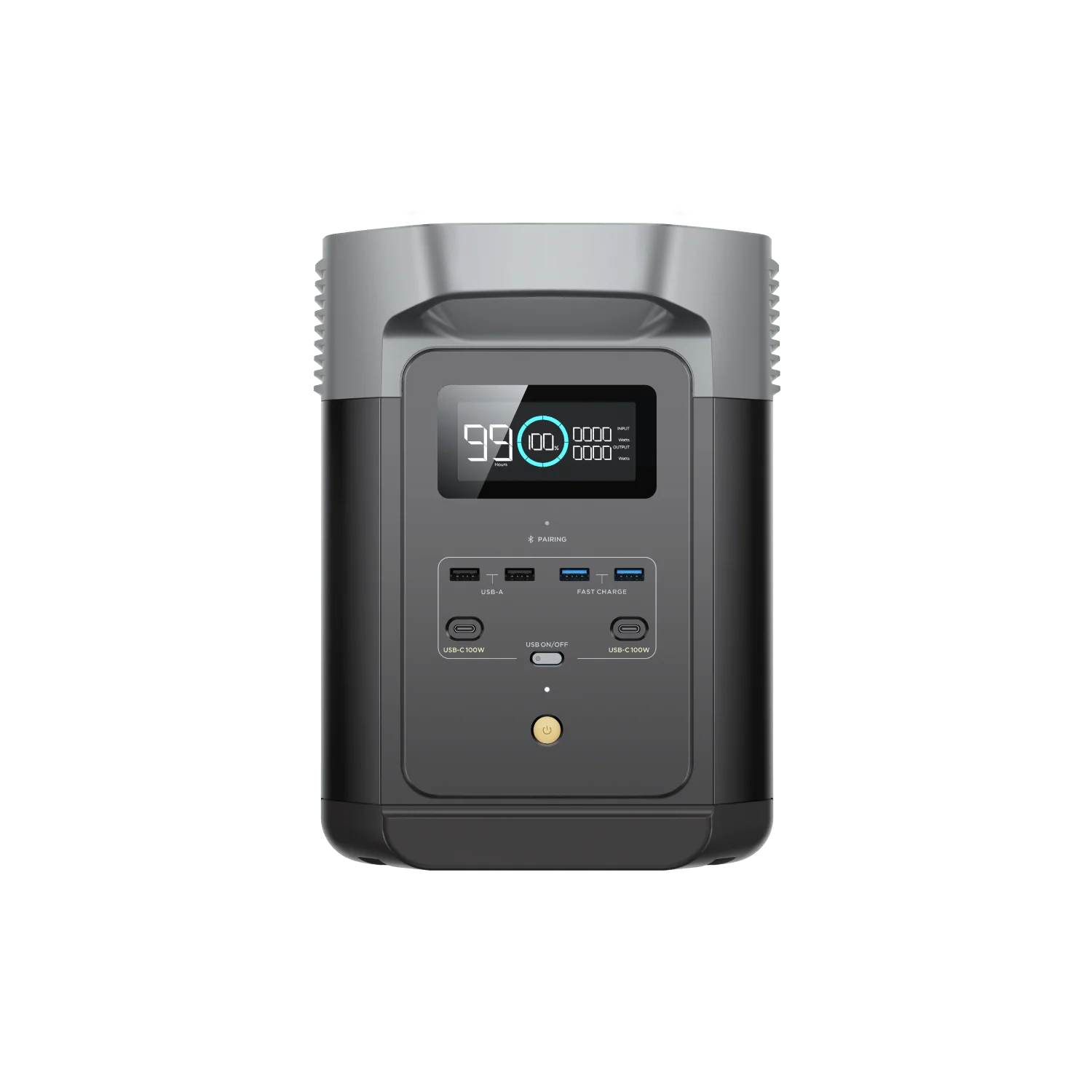
Home backup
EcoFlow
EcoFlow DELTA 2
Capacity
1.024 kWh
Weight
12.0kg (26.5 lb)


Photo from the manufacturer
JouleSpecs does not sell and does not show shop prices: check the price where you buy.
Where to buy
Check the price on AmazonPaid link: the price for you does not change.
As an Amazon Associate I earn from qualifying purchases.
DJI Power 1000 V2 is a power station with lithium iron phosphate cells, built for emergency power at home as well as camping: it stays permanently connected to the mains and recognizes a power outage on its own, switching to the battery in about ten milliseconds. It still stays on basic backup, not suited to equipment that demands zero interruption, such as a server holding unsaved data.
It grows in capacity by connecting dedicated expansion batteries, when the starting reserve isn't enough anymore. It charges from the mains, from the sun with dedicated accessories - for the maximum solar input an expansion battery is also needed - or from the car.
It's also controlled from the DJI Home app over Wi-Fi or Bluetooth, but the physical buttons are enough for everyday use. It's built for anyone who wants a reserve that covers more than a couple of appliances during a blackout, as well as for camping or working away from home; it stays equipment to move and reconnect, not a fixed wall installation.
Best balance of technical score and price among the 15 sheets in the Home backup category (room-sized tier): list price €649, technical score 76/100.
How we assign awards →midpoint of the estimated range — on nominal capacity
| Parameter | Value | Source |
|---|---|---|
| Weight | 14.2 kg (31.3 lb) | manufacturer website |
| Power supply | 220-240 V / 50-60 Hz | manufacturer website |
| Nominal capacity | 1.024 kWh | Declared by the brand |
| Cell chemistry | LFP (lithium iron phosphate) | Declared by the brand |
| Expandable | Yes | Declared by the brand |
| Maximum expanded capacity | 11.264 kWh | Declared by the brand |
| Continuous output | 2600 W | Declared by the brand |
| AC outlets | 2 | Declared by the brand |
| Fastest USB-C | 140 W | Declared by the brand |
| Maximum charge power | 1.44 kW | Declared by the brand |
| 0–80% charge time | 37 min | Declared by the brand |
| Maximum solar input | 1800 W | Declared by the brand |
| Backup power | UPS | Declared by the brand |
| Switchover time | 10 ms | Declared by the brand |
| Rated cycles | 4000 cicli | Declared by the brand |
| Capacity at end of cycle life | 80 % | Declared by the brand |
| Warranty | 5 anni | Declared by the brand |
| Mounting | Portable | Declared by the brand |
| Minimum temperature | -10 °C | Declared by the brand |
| Maximum temperature | 45 °C | Declared by the brand |
| Noise level | 26 dB | Declared by the brand |
| Usable capacity | — | Not declared |
| Depth of discharge | — | Not declared |
| Cell supplier | — | Not declared |
| Peak output | — | Not declared |
| Peak duration | — | Not declared |
| Guaranteed throughput | — | Not declared |
| Guaranteed remaining capacity | — | Not declared |
| Round-trip efficiency | — | Not declared |
| Standby consumption | — | Not declared |
| Ingress protection | — | Not declared |
| Cell heating | — | Not declared |
| Wheels and handle | — | Not declared |
| Works without internet | — | Not declared |
| Local control | — | Not declared |
| Open protocols | — | Not declared |
| Home Assistant integration | — | Not declared |
| Where the data is hosted | — | Not declared |
| Remote updates | — | Not declared |
| App required for setup | — | Not declared |
| Declared standards | — | Not declared |
These numbers are calculated, not stated: they have no source to cite, they have a formula you can redo. The price used is the manufacturer's list price, which is stable and the same in every country — not a shop's price on the day.
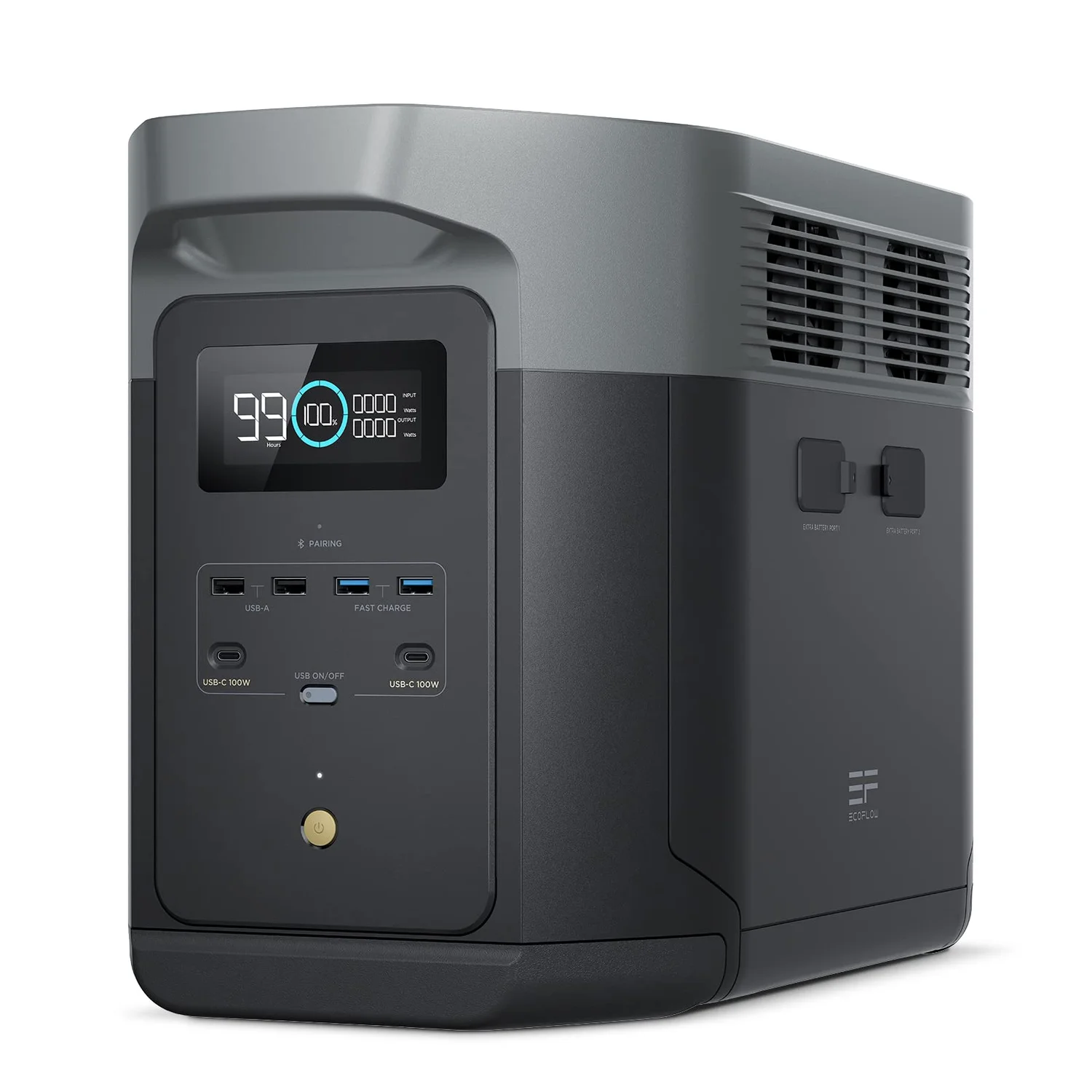


Chosen by the declared use tier and footprint, not by price: we don't publish prices.

