EcoFlow TRAIL 300 DC — Ultraportable
EcoFlow TRAIL 300 DC EF-TRAIL300-N

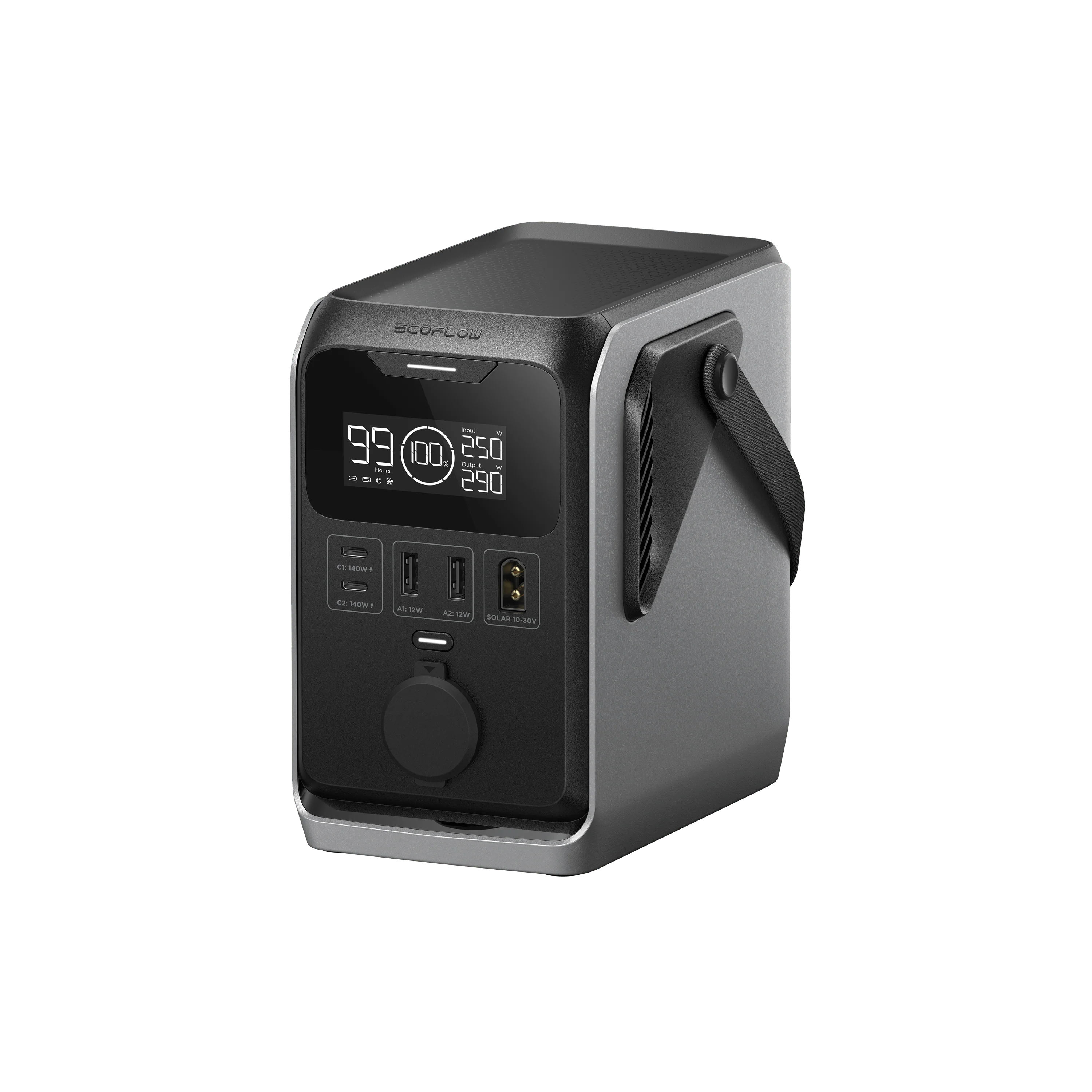
Photo from the manufacturer

Ultraportable F1 · Outlet-sized (up to 1 kWh)

EcoFlow EcoFlow TRAIL 300 DC

Price
Not available

JouleSpecs does not sell and does not show shop prices: check the price where you buy.

Where to buy

Check the price on Amazon

Paid link: the price for you does not change.

As an Amazon Associate I earn from qualifying purchases.

Data from official source

EcoFlow TRAIL 300 DC is a pocket-sized power station with no AC outlet: it only outputs DC, from the USB-C and USB-A ports and from an input that takes either a foldable panel or the car cable. The battery is lithium iron phosphate and fits in one hand.

The two USB-C ports reach a hundred forty watts each, enough for a laptop as well as a phone. There's no app, and no Bluetooth or Wi-Fi either: it's controlled from the buttons and the screen on the panel, which means it still works when the phone is dead, but also that it can't be checked from a distance.

It's for anyone hiking, cycling or paddling who wants to keep a phone, an action camera, a headlamp or a satellite communicator charged over several days running. It isn't a home reserve: anything that wants a wall outlet doesn't plug in here.

01 · Verified data

Technical specifications

Cell chemistry LFP (lithium iron phosphate)
Cost per kWh 621,53 €/kWh

official manufacturer list price — on nominal capacity

Round-trip efficiency EcoFlow does not state it.

where we looked

Standby consumption EcoFlow does not state it.

where we looked

Parameter Value Source
Dimensions 11.5 × 16.6 × 16.7 cm (4.5 × 6.5 × 6.6 in) manufacturer website
Weight 2.58 kg (5.7 lb) manufacturer website
Nominal capacity 0.288 kWh Declared by the brand
Cell chemistry LFP (lithium iron phosphate) Declared by the brand
Fastest USB-C 140 W Declared by the brand
Maximum solar input 110 W Declared by the brand
Warranty 3 anni Declared by the brand
Ingress protection IP30 Declared by the brand
Mounting Portable Declared by the brand
Local control None Declared by the brand
Official list price 179 € Declared by the brand
Usable capacity Not declared
Depth of discharge Not declared
Cell supplier Not declared
Expandable Not declared
Maximum expanded capacity Not declared
Continuous output Not declared
Peak output Not declared
Peak duration Not declared
AC outlets Not declared
Maximum charge power Not declared
0–80% charge time Not declared
Backup power Not declared
Switchover time Not declared
Rated cycles Not declared
Capacity at end of cycle life Not declared
Guaranteed throughput Not declared
Guaranteed remaining capacity Not declared
Round-trip efficiency Not declared
Standby consumption Not declared
Minimum temperature Not declared
Maximum temperature Not declared
Cell heating Not declared
Noise level Not declared
Wheels and handle Not declared
Works without internet Not declared
Open protocols Not declared
Home Assistant integration Not declared
Where the data is hosted Not declared
Remote updates Not declared
App required for setup Not declared
Declared standards Not declared
02 · The numbers

What it really costs

Cost per kWh 621.530 €/kWh official manufacturer list price — on nominal capacity
How we worked it out
price
179
nominal capacity
0.288
Battery life cycles 1095 cycles warranty years
  • the manufacturer does not state the guaranteed total energy throughput, which for heavy users is often the limit that runs out first
How we worked it out
warranty years
1095
Cost of stored energy 0.568 €/kWh warranty years
  • the manufacturer does not state the guaranteed total energy throughput, which for heavy users is often the limit that runs out first
  • on nominal capacity: the manufacturer does not state the usable figure, so the real cost is higher
  • without conversion losses, which the manufacturer does not state: the real cost is higher
How we worked it out
price
179
nominal capacity
0.288
battery life cycles
1095
round-trip efficiency
100
energy delivered over the whole life
315
Energy density 111.600 Wh/kg
  • on nominal capacity: the manufacturer does not state the usable figure, so the true number is lower
How we worked it out
nominal capacity
0.288
weight
2.580

These numbers are calculated, not stated: they have no source to cite, they have a formula you can redo. The price used is the manufacturer's list price, which is stable and the same in every country — not a shop's price on the day.

03 · Summary

Pros and cons

In favour

  • Two USB-C ports at a hundred forty watts each: they charge a laptop, not just a phone.
  • The same input takes the solar panel or the car cable: outdoors it fills up either way.
  • Two and a half kilos: it fits in a backpack's side pocket. source

Worth knowing

  • No AC outlet: it doesn't power a fridge or anything else that wants a wall plug. source
  • It's controlled only from the buttons on the panel: no app, no Bluetooth, no control from a distance.
  • It protects against dust but not water: under rain it needs shelter. source
If not this one

Alternatives in the catalogue

Chosen by the declared use tier and footprint, not by price: we don't publish prices.