
Ultraportable
Anker SOLIX · A1723311
Anker SOLIX C300X
Capacity
0.288 kWh


Photo from the manufacturer
JouleSpecs does not sell and does not show shop prices: check the price where you buy.
Where to buy
Check the price on AmazonPaid link: the price for you does not change.
As an Amazon Associate I earn from qualifying purchases.
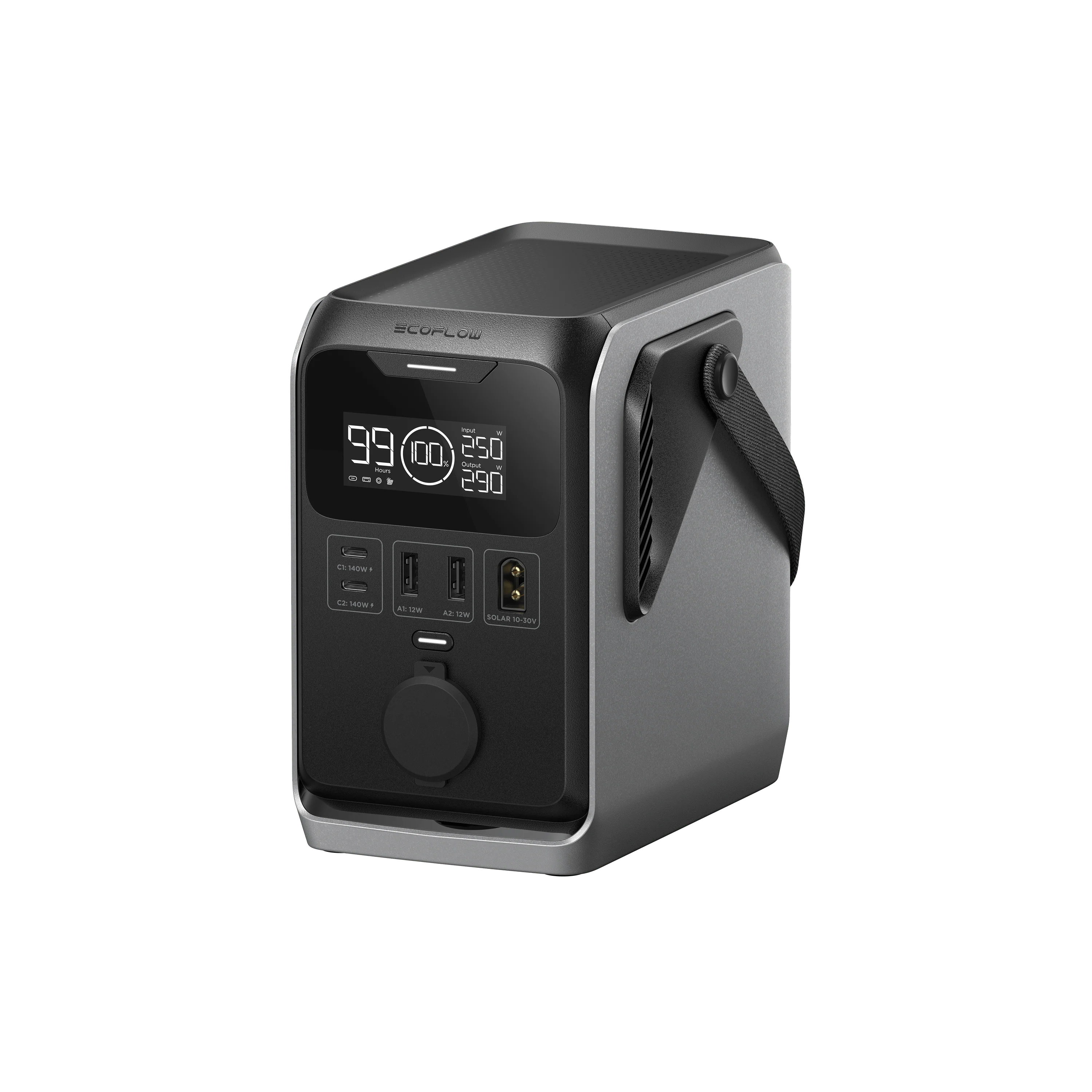
EcoFlow RIVER 3 Plus Wireless is an ultraportable lithium iron phosphate power station with a magnetic power bank attached to the lid: a phone rests there and charges, and the power bank detaches and goes in a pocket while the power station stays put, still working.
There are three AC outlets, which on a unit this size means not having to carry a power strip along. Connected to the grid it acts as backup and, when power is missing, the switch to the battery is invisible. For the startup surge of a small motor, a dedicated function raises the power ceiling for a moment, and runtime extends with one dedicated battery, just one.
It charges from the outlet, the sun or the car's cigarette lighter socket, and works without making itself heard. It's the reserve for anyone leaving for the weekend with a phone, a computer and a modem to keep running, who wants to carry a single object instead of three.
official manufacturer list price — on nominal capacity
| Parameter | Value | Source |
|---|---|---|
| Dimensions | 23.4 × 23.2 × 15.2 cm (9.2 × 9.1 × 6.0 in) | manufacturer website |
| Weight | 5.2 kg (11.5 lb) | manufacturer website |
| Nominal capacity | 0.286 kWh | Declared by the brand |
| Cell chemistry | LFP (lithium iron phosphate) | Declared by the brand |
| Expandable | Yes | Declared by the brand |
| Continuous output | 600 W | Declared by the brand |
| Peak output | 1200 W | Declared by the brand |
| AC outlets | 3 | Declared by the brand |
| Fastest USB-C | 100 W | Declared by the brand |
| Maximum charge power | 0.38 kW | Declared by the brand |
| Maximum solar input | 220 W | Declared by the brand |
| Backup power | UPS | Declared by the brand |
| Switchover time | 10 ms | Declared by the brand |
| Rated cycles | 3000 cicli | Declared by the brand |
| Capacity at end of cycle life | 80 % | Declared by the brand |
| Warranty | 5 anni | Declared by the brand |
| Mounting | Portable | Declared by the brand |
| Noise level | 30 dB | Declared by the brand |
| Official list price | 349 € | Declared by the brand |
| Usable capacity | — | Not declared |
| Depth of discharge | — | Not declared |
| Cell supplier | — | Not declared |
| Maximum expanded capacity | — | Not declared |
| Peak duration | — | Not declared |
| 0–80% charge time | — | Not declared |
| Guaranteed throughput | — | Not declared |
| Guaranteed remaining capacity | — | Not declared |
| Round-trip efficiency | — | Not declared |
| Standby consumption | — | Not declared |
| Ingress protection | — | Not declared |
| Minimum temperature | — | Not declared |
| Maximum temperature | — | Not declared |
| Cell heating | — | Not declared |
| Wheels and handle | — | Not declared |
| Works without internet | — | Not declared |
| Local control | — | Not declared |
| Open protocols | — | Not declared |
| Home Assistant integration | — | Not declared |
| Where the data is hosted | — | Not declared |
| Remote updates | — | Not declared |
| App required for setup | — | Not declared |
| Declared standards | — | Not declared |
The rest of the data comes from 2 pages on the manufacturer's site, cited row by row in the table above.
A manual or a datasheet counts as a source even when the original file is hosted elsewhere: what matters is the document, not the server. Where that happens, it is stated above.
These numbers are calculated, not stated: they have no source to cite, they have a formula you can redo. The price used is the manufacturer's list price, which is stable and the same in every country — not a shop's price on the day.


Chosen by the declared use tier and footprint, not by price: we don't publish prices.


