RCT Power Battery 9.6 vs SMA Home Storage 16.4
Technical comparison · High voltage
Two high-voltage LFP home batteries, each declared for specific inverters: the RCT Power Battery 9.6 for the RCT Power Storage DC series, the SMA Home Storage 16.4 only for the three-phase SMA Sunny Tripower Smart Energy. Once the inverter is settled, usable capacity (8.64 against 16.4 kWh) and warranty length decide (manufacturer-declared figures).
| Parameter | ||
|---|---|---|
| In brief | ||
| Usable capacity | 8.64 kWh | 16.4 kWh |
| Cell chemistry | LFP (lithium iron phosphate) | LFP (lithium iron phosphate) |
| Weight | 126 kg | 190 kg |
| Dimensions (W×D×H) | 34 × 34 × 129 cm | — |
| How long it lasts | ||
| Battery life cycles | 3650 cicli | 730 cicli |
| The limit that runs out first | anni di garanzia | anni di garanzia |
| Rated cycles | — | 8000 cicli |
| Capacity at end of cycle life | — | 60 % |
| Warranty | 10 anni | 2 anni |
| Guaranteed throughput | — | 118.08 MWh |
| Guaranteed remaining capacity | 80 % | 60 % |
| The numbers | ||
| Energy density | 68.6 Wh/kg | 86.3 Wh/kg |
| Identity | ||
| Use tier | F4 — House-sized (8–20 kWh) | F4 — House-sized (8–20 kWh) |
| Category specs | ||
| Depth of discharge | 90 % | 100 % |
| Expandable | Yes | Yes |
| Maximum expanded capacity | 19.2 kWh | 16.4 kWh |
| Battery voltage | 384 V | 480 V |
| Declared compatible inverters | RCT Power Storage DC (6.0/8.0/10.0 LAN, 12.0): intervallo di tensione lato batteria 120-600 V dichiarato dall'inverter, entro cui rientra questa taglia (384 V nominali, 300-432 V di range). | Compatibile solo con l'inverter trifase SMA Sunny Tripower Smart Energy, che supporta da 2 a 5 moduli SMA Home Storage: il monofase Sunny Boy Smart Energy arriva al massimo a 4 moduli e non copre questa taglia. Non retrofittabile sui vecchi Sunny Boy Storage (SBS2.5-1VL-10, SBS3.7-10-SBS6.0-10) né con inverter di altri marchi. |
| Round-trip efficiency | — | 94.5 % |
| Standby consumption | 5 W | 10 W |
| Ingress protection | ip42 | IP65 |
| Mounting | Floor standing | Wall mounted |
| Minimum temperature | 5 °C | -10 °C |
| Maximum temperature | 40 °C | 50 °C |
| Local control | None | — |
| Remote updates | — | Can be disabled |
| Declared standards | CE, UN 38.3, IEC 62619 | CE, UN 38.3, IEC 62619, IEC 62477, VDE 2510-50 |
The differences that matter
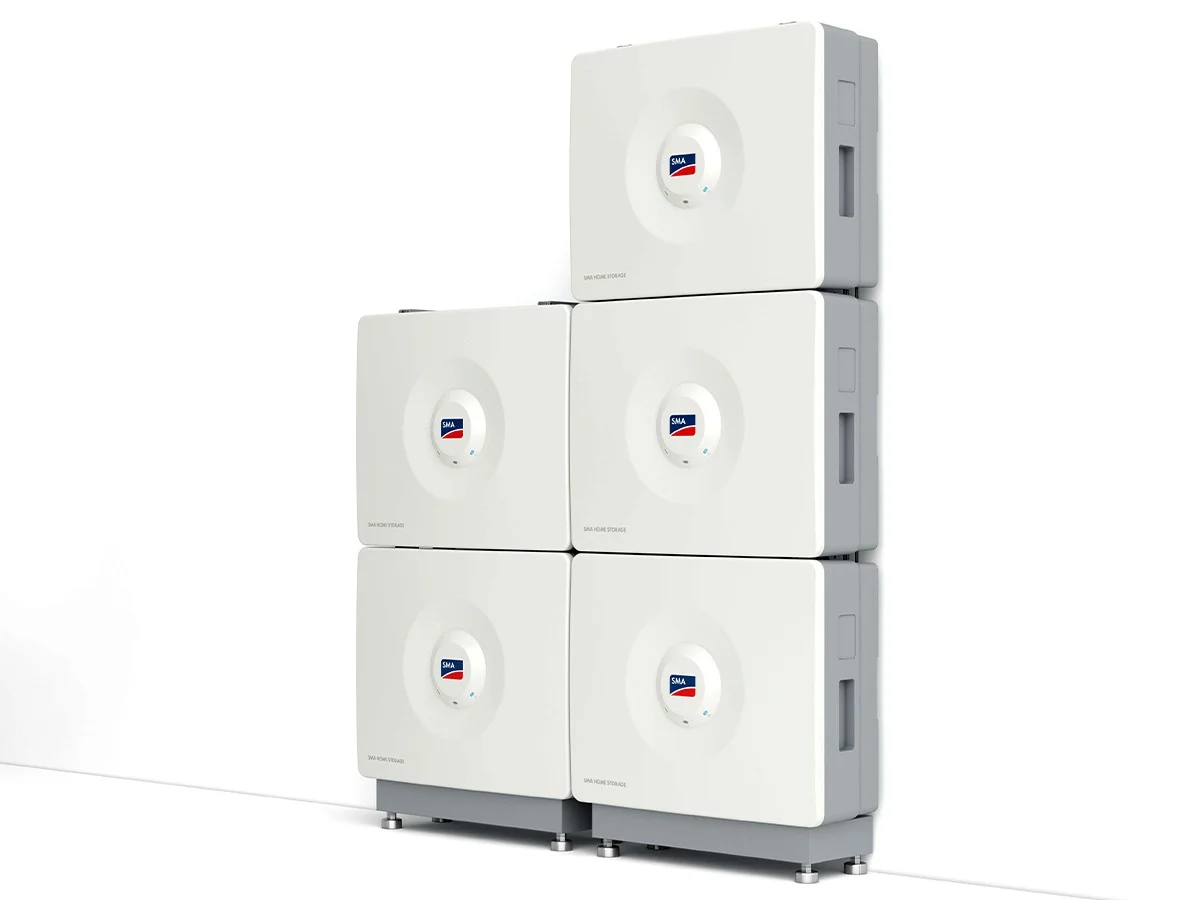
- Inverter → the RCT is declared for RCT Power Storage DC; the SMA only for the three-phase Sunny Tripower Smart Energy, which takes 2 to 5 modules (the single-phase model does not cover this size).
- 8.64 kWh vs 16.4 kWh usable → the SMA offers almost twice the energy; the RCT reaches 19.2 kWh only when expanded.
- 10 years vs 2 years of warranty → after year two the SMA is no longer covered; the RCT is, up to year ten.
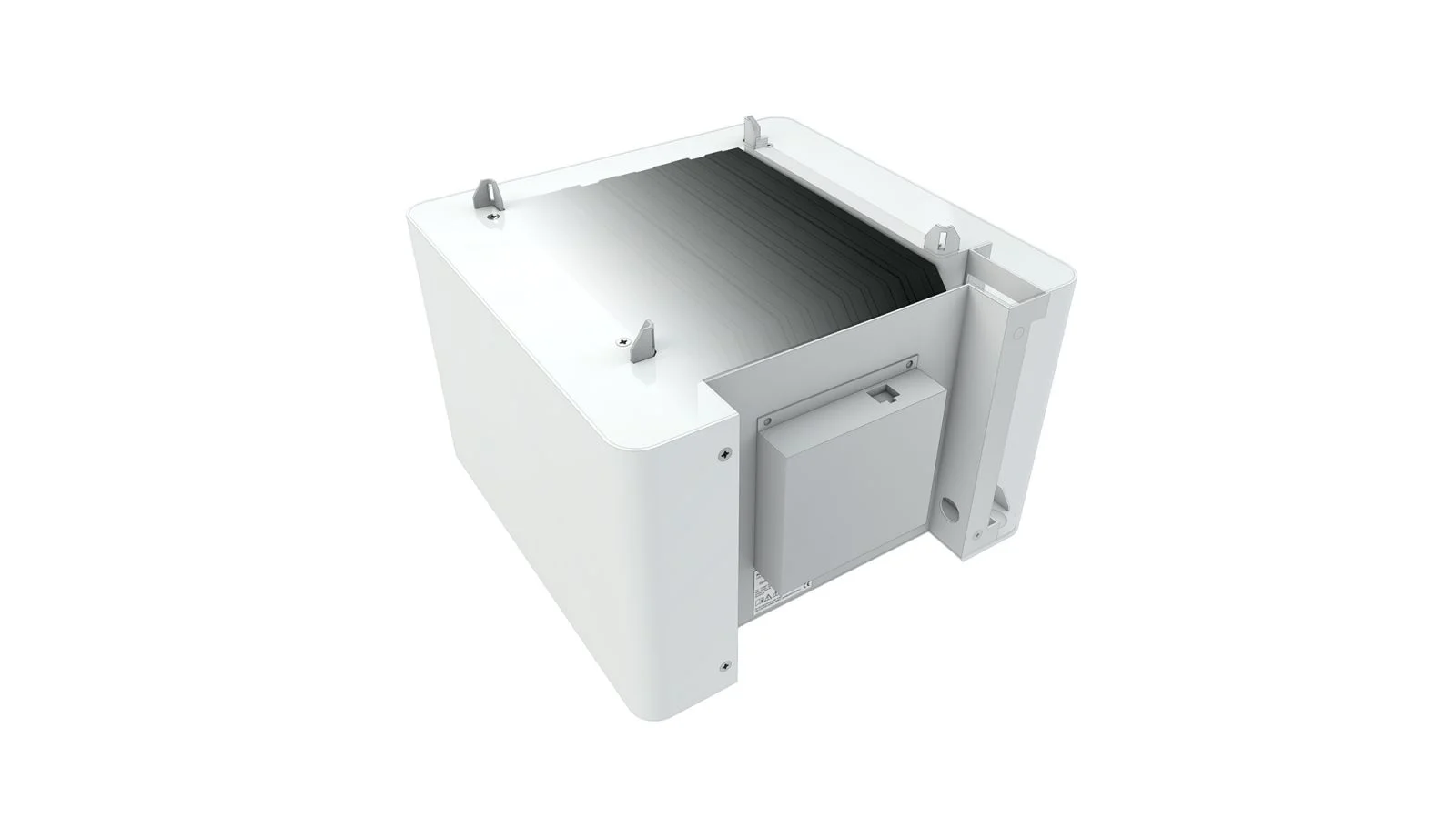
- Floor-standing, IP42, 5 to 40 °C vs wall-mounted, IP65, -10 to 50 °C → the RCT needs an indoor, mild room; the SMA tolerates cold and less protected spots.
Which one to choose
Choose RCT Power Battery 9.6 if…
you have or plan an RCT Power Storage DC inverter and an indoor, sheltered room that does not freeze, with the battery standing on the floor. You accept less capacity and a lower ingress rating. In return the idle draw is 5 W: in theory about 0.12 kWh a day, against 0.24 kWh for the other's 10 W.
Choose SMA Home Storage 16.4 if…
the system has or plans the three-phase SMA Sunny Tripower Smart Energy and you want 16.4 kWh usable on a wall, even in a cold or less sheltered room. You accept a warranty that ends after two years and no pairing with other inverter brands.
Where to buy
The purchase links are the same as on the two product pages and don't influence the verdict. The product pages have the complete data.