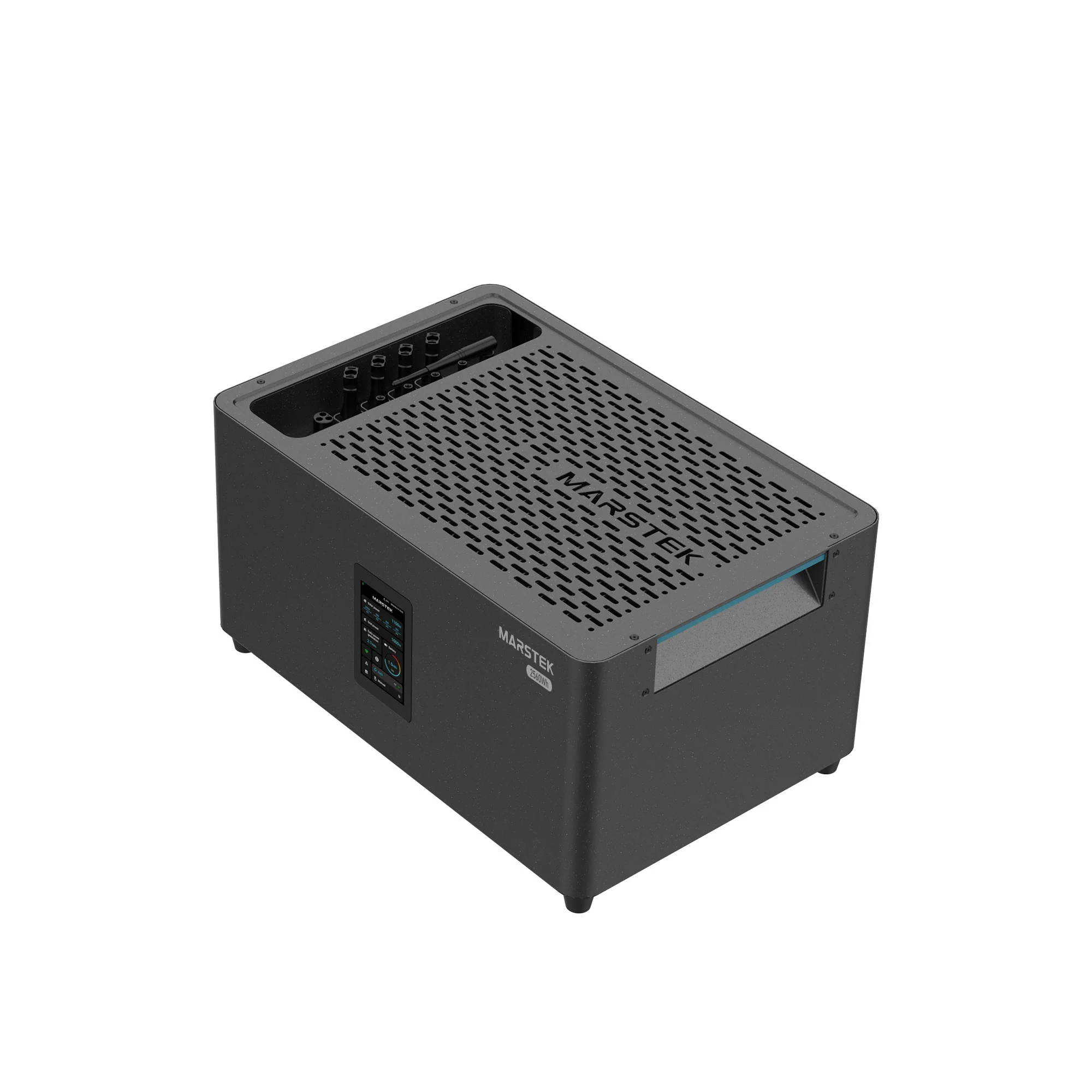
Zendure Zendure SolarFlow 2400 Pro
JouleSpecs does not sell and does not show shop prices: check the price where you buy.
Where to buy
Check the price on AmazonPaid link: the price for you does not change.
As an Amazon Associate I earn from qualifying purchases.
Zendure SolarFlow 2400 Pro is a balcony storage unit that holds the battery, the converter and four independent solar panel inputs in a single body, to limit visible cabling and simplify wall or balcony mounting. It returns energy into the home through a dedicated outlet, within the limit allowed by balcony solar regulation: exceeding that limit needs an electrician to hardwire it to a new circuit breaker and register it as a non plug-and-play storage inverter. It grows with more batteries from the same system, when the starting capacity isn't enough anymore.
It recognizes a power outage in the home on its own and switches to the battery to power the loads connected to its dedicated emergency outlet, separate from the one that returns energy to the grid. It also charges from the grid when no panels are connected or when the sun isn't enough, which makes it useful too for anyone who wants to take advantage of the cheapest hours or of surplus energy on the grid. Below zero it heats the battery on its own before charging it, to avoid damaging it with the cold.
It's set up and controlled from the manufacturer's app, which is also needed to choose the operating mode and for remote monitoring: without a smartphone and a Wi-Fi connection, initial setup can't be completed. It talks to several third-party smart meters to adjust the power returned based on what the home is drawing at that moment, avoiding feeding back energy that's already been paid for. It's built for anyone who already has a sunny balcony or outdoor wall and wants to store the excess energy; anyone looking for a reserve able to power the whole home during a prolonged blackout needs a different system.
JouleSpecs Awards
Most capable Room-sized (1–3 kWh) · All-in-one
Highest technical score among the 18 sheets in the All-in-one category (room-sized tier): 79/100.
How we assign awards →Technical specifications
| Parameter | Value | Source |
|---|---|---|
| Dimensions | 32.6 × 25.1 × 29.4 cm (12.8 × 9.9 × 11.6 in) | manufacturer website |
| Weight | 27.8 kg (61.3 lb) | manufacturer website |
| Nominal capacity | 2.4 kWh | Declared by the brand |
| Cell chemistry | LFP (lithium iron phosphate) | Declared by the brand |
| Expandable | Yes | Declared by the brand |
| Maximum expanded capacity | 16.8 kWh | Declared by the brand |
| Battery voltage | 48 V | Declared by the brand |
| Feed-in limit | 800 VA | Declared by the brand |
| Inverter included | Yes | Declared by the brand |
| Maximum solar input | 3000 W | Declared by the brand |
| MPPT trackers | 4 | Declared by the brand |
| Grid charging | Yes | Declared by the brand |
| Maximum charge power | 2.4 kW | Declared by the brand |
| Dynamic tariffs | Built in | Declared by the brand |
| Backup power | EPS (brief interruption) | Declared by the brand |
| Backup output | 2400 W | Declared by the brand |
| Warranty | 10 anni | Declared by the brand |
| Ingress protection | IP65 | Declared by the brand |
| Minimum temperature | -20 °C | Declared by the brand |
| Maximum temperature | 55 °C | Declared by the brand |
| Cell heating | Yes | Declared by the brand |
| App required for setup | Yes | Declared by the brand |
| Usable capacity | — | Not declared |
| Depth of discharge | — | Not declared |
| Cell supplier | — | Not declared |
| Switchover time | — | Not declared |
| Rated cycles | — | Not declared |
| Capacity at end of cycle life | — | Not declared |
| Guaranteed throughput | — | Not declared |
| Guaranteed remaining capacity | — | Not declared |
| Round-trip efficiency | — | Not declared |
| Standby consumption | — | Not declared |
| Mounting | — | Not declared |
| Noise level | — | Not declared |
| Works without internet | — | Not declared |
| Local control | — | Not declared |
| Open protocols | — | Not declared |
| Home Assistant integration | — | Not declared |
| Where the data is hosted | — | Not declared |
| Remote updates | — | Not declared |
| Declared standards | — | Not declared |
| Battery passport | — | Not declared |
| Carbon footprint | — | Not declared |
| Recycled content | — | Not declared |
What it really costs
- the manufacturer does not state the guaranteed total energy throughput, which for heavy users is often the limit that runs out first
How we worked it out
- warranty years
- 3650
- on nominal capacity: the manufacturer does not state the usable figure, so the true number is lower
How we worked it out
- nominal capacity
- 2.400
- weight
- 27.800
These numbers are calculated, not stated: they have no source to cite, they have a formula you can redo. The price used is the manufacturer's list price, which is stable and the same in every country — not a shop's price on the day.
Pros and cons
In favour
- When power fails in the home, it switches to the battery on its own, powering the loads connected to its dedicated emergency outlet.
- It also charges from the grid without panels connected, to take advantage of the cheapest hours.
- It heats the battery on its own when it's cold, to charge it safely even below zero.
- It grows by adding more batteries from the same system when the starting capacity isn't enough anymore.
Worth knowing
- Initial setup and changing the mode only go through the manufacturer's app, which needs a Wi-Fi network.
- Feeding back more than the base threshold into the grid needs an electrician to hardwire it and register it as a non plug-and-play inverter.
- Adjusting the power returned to match the home's actual consumption needs a compatible smart meter, bought and installed separately. source
Similar products worth weighing up
Other products Zendure
Alternatives in the catalogue
Chosen by the declared use tier and footprint, not by price: we don't publish prices.


