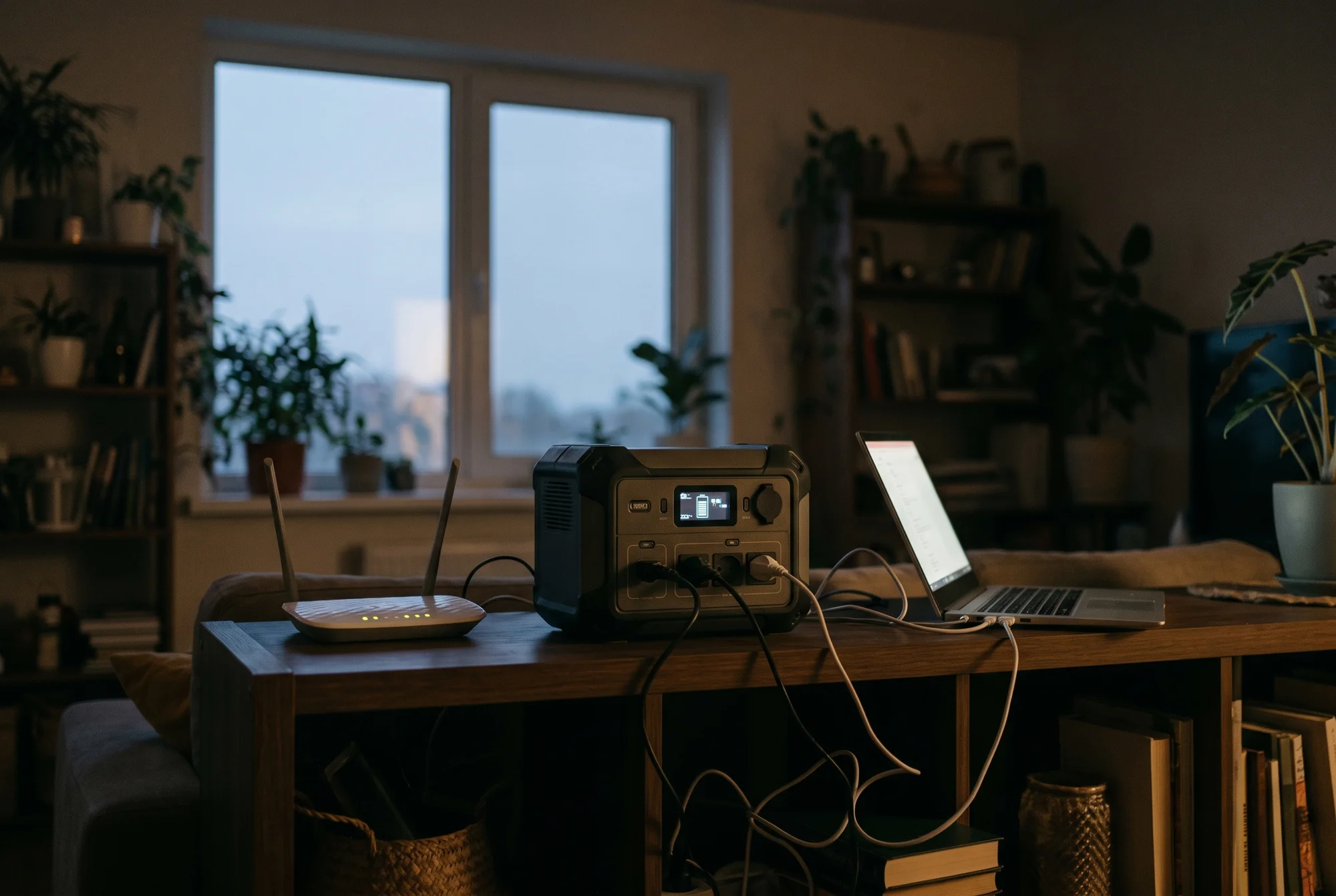
Expansion battery: when it makes sense to add one
An expansion battery adds energy, not power, and only works with the machine it was made for. Here is how to tell whether you need one, and what to check on the product page before ordering.
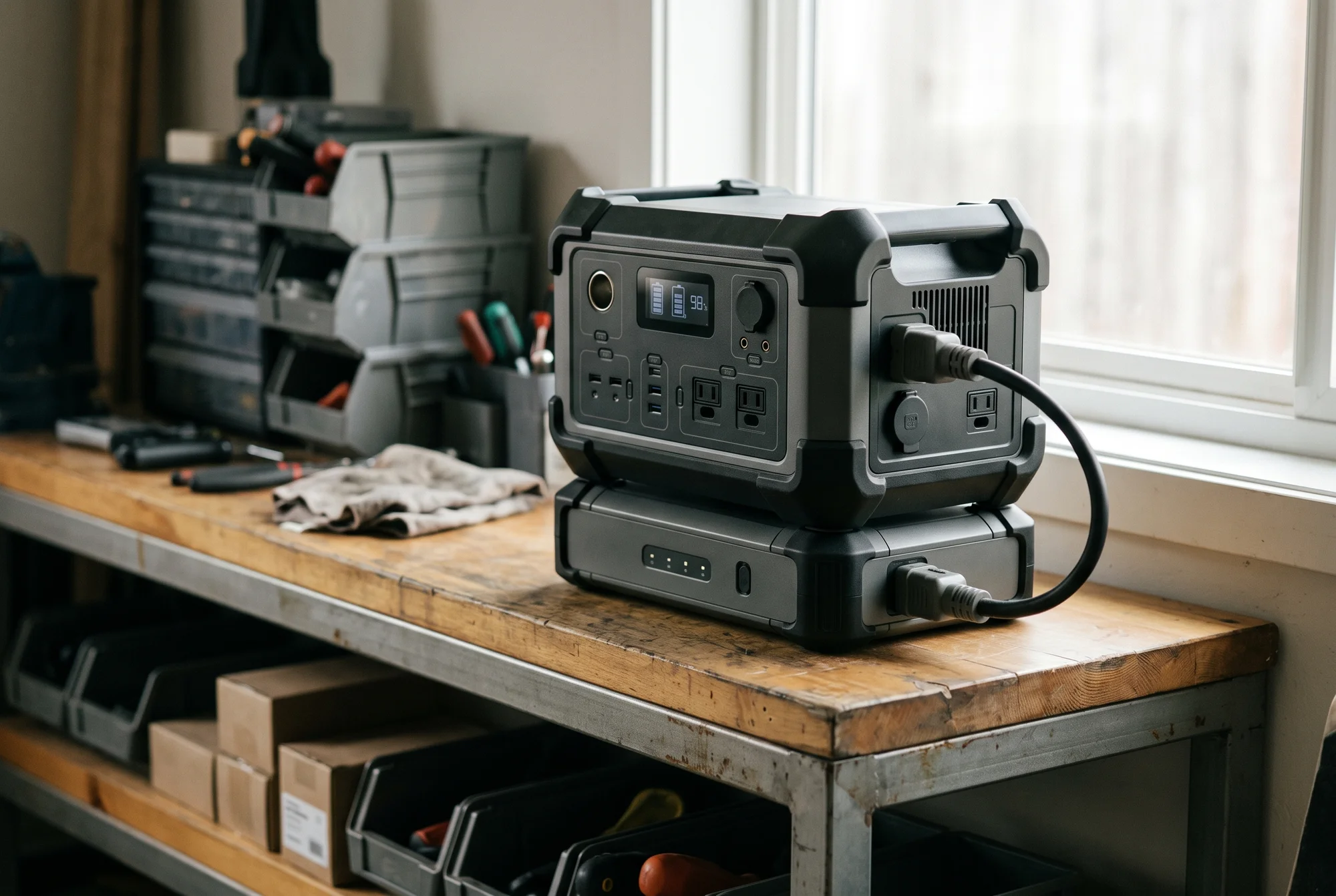
An expansion battery is not a smaller power station. It is a module that adds energy to a machine that already has some, and on its own, in the cases we have in the catalogue, it does nothing: it has no inverter and does not put out power by itself. The right question is not “which expansion do I buy” but “should I start with a machine that can grow, or buy the bigger one now?”.
What really changes
An expansion changes one thing: how many watt-hours you have available. How much power you can draw at any instant is still decided by the main unit. If your machine can carry a heavy load for ten minutes, with an extra battery it carries it for longer, but it cannot carry a heavier one. Anyone who mixes up the two numbers buys capacity to fix a power problem, and the problem stays.
That is why a product page has to be read in two parts: the capacity you can add, and the ceiling the manufacturer states for the whole set.
A concrete example: EcoFlow DELTA 2 Max
The EcoFlow DELTA 2 Max is a home power station built to grow. Its module, the DELTA 2 Max Smart Extra Battery, has LFP cells and a capacity of 2048 Wh. You connect one or two to the DELTA 2 Max, up to a total of 6144 Wh. Beyond that you cannot go: the manufacturer sets the ceiling.
The list price of the expansion is 799 euros. Do the sum on the price of each extra kWh, not on the figure on the receipt, and compare it with that of a bigger machine.
The same module is stated as compatible with the EcoFlow DELTA 2 and the DELTA Max 2000 too. But the 6144 Wh ceiling is written for the DELTA 2 Max: with the other two, check it on the product page before ordering. EcoFlow also has a separate expansion for the DELTA 2, the DELTA 2 Smart Extra Battery: a similar name does not mean the two modules are interchangeable.
Compatibility: where most mistakes happen
The real constraint is this: the same brand is not enough, you need the same line. Three examples from our product pages.
- The Zendure AB3000X connects only to the SolarFlow 2400 AC system. It is not compatible with the SolarFlow 2400 Pro or AC+. Same brand, but it does not fit.
- The Anker SOLIX BP5000 connects to several generations of Solarbank, not just the one from its own model year, but not to all of them: battery voltage is the first value to check.
- The EcoFlow module above works with three specific machines, not with the whole EcoFlow catalogue.
When you open an expansion product page, look for three things, in this order: which model or system it connects to, how many units it accepts, and what the maximum total capacity is. If one of the three is missing or vague, do not buy until you have cleared it up with the manufacturer.
Weight and space: an expansion is not an accessory
A module of a few kWh weighs as much as a full suitcase. From the product pages: the DJI Power Expansion Battery 2000 weighs 16.5 kg, the EcoFlow expansion 19 kg, the Zendure AB3000X 26.1 kg, the BLUETTI B300K 29.5 kg and the Anker BP5000 42 kg. For a balcony, the note we wrote on the Anker page applies: you add a second heavy weight, and it is worth checking that the support can take it. The Zendure mounts on the wall with the included brackets.
More modules also means more space and more cables. If your machine was made to be carried around, two expansions turn it into something that stays put.
Expansion or a bigger machine up front?
Go for the machine that can grow if:
- you do not yet know how much energy you really need and want to start small;
- the budget is tight today and buying in pieces is the only way;
- you already own the main unit and find the energy is no longer enough. That is the case for anyone with an Anker or Zendure balcony system.
Go for the bigger one now if:
- you already know your needs and they will not change;
- the load you worry about is a power problem: an expansion does not solve it;
- you want a single product to manage, without checking compatibility and maximum ceiling.
One point on lifespan: on the EcoFlow page the cells are rated at 3,000 cycles to 80 % or more of remaining capacity, with a five-year warranty. Cycling the battery every day means about 1,800 cycles in five years, so the warranty ends before the cycles do. If you add a module years after the main unit, check the warranty of both on their own pages.
How to check a product page in two minutes
- Brand and line. Does the name of the main unit appear on the expansion page? If you cannot find it, assume it is not compatible until proven otherwise.
- Number of modules. How many it accepts, and what the stated total is.
- What it does not do alone. If the page says it has no inverter or does not produce power on its own, it is a module, not a standalone product.
- Weight. It is on the page: ask yourself where you will put it and who will lift it.
- Price. Divide by the watt-hours added and compare with the bigger machine.
If, after these five steps, the answer is still “it depends”, you are usually missing a figure for the main unit, not the expansion. Start there: its product page is the first thing to open.