Jackery SolarVault 3 Pro Max vs Zendure SolarFlow 800 Plus
Technical comparison · All-in-one
Two balcony storage units with the same 800 VA feed-in limit and a ten-year warranty, set apart mainly by how much solar they accept: 4,000 W over four MPPT trackers against 1,500 W over two. With a few panels the gap goes unused; it matters to anyone connecting a full array. Figures are manufacturer-declared.
| Parameter | ||
|---|---|---|
| In brief | ||
| Nominal capacity | 2.52 kWh | 1.92 kWh |
| Cell chemistry | LFP (lithium iron phosphate) | LFP (lithium iron phosphate) |
| Cost per kWh | 287.7 €/kWh | — |
| List price | 725 € | — |
| Weight | 26.5 kg | 21.1 kg |
| How long it lasts | ||
| Battery life cycles | 3650 cicli | 3650 cicli |
| The limit that runs out first | anni di garanzia | anni di garanzia |
| Rated cycles | 6000 cicli | — |
| Capacity at end of cycle life | 70 % | — |
| Warranty | 10 anni | 10 anni |
| The numbers | ||
| Cost of stored energy | 0.079 €/kWh | — |
| Energy density | 95.1 Wh/kg | 91 Wh/kg |
| Identity | ||
| Use tier | F2 — Room-sized (1–3 kWh) | F2 — Room-sized (1–3 kWh) |
| Price | ||
| Price | ~450–1000 € | — |
| Universal specs | ||
| Voltage | 230 V | — |
| Category specs | ||
| Depth of discharge | 90 % | — |
| Expandable | Yes | Yes |
| Maximum expanded capacity | 15.12 kWh | 11.52 kWh |
| Battery voltage | 41.6 V | 48 V |
| Feed-in limit | 800 VA | 800 VA |
| Inverter included | — | Yes |
| Maximum solar input | 4000 W | 1500 W |
| MPPT trackers | 4 | 2 |
| Grid charging | Yes | Yes |
| Maximum charge power | 3.68 kW | 1.2 kW |
| Dynamic tariffs | Built in | — |
| Backup power | UPS | — |
| Backup output | 1600 W | — |
| Switchover time | 20 ms | — |
| Ingress protection | IP65 | IP65 |
| Mounting | Floor standing | — |
| Minimum temperature | -20 °C | -20 °C |
| Maximum temperature | 55 °C | 55 °C |
| Cell heating | Yes | — |
| Works without internet | With limitations | No |
| Home Assistant integration | — | Official |
| App required for setup | — | Yes |
| Declared standards | VDE-AR-N 4105, IEC 62619 | VDE-AR-N 4105 |
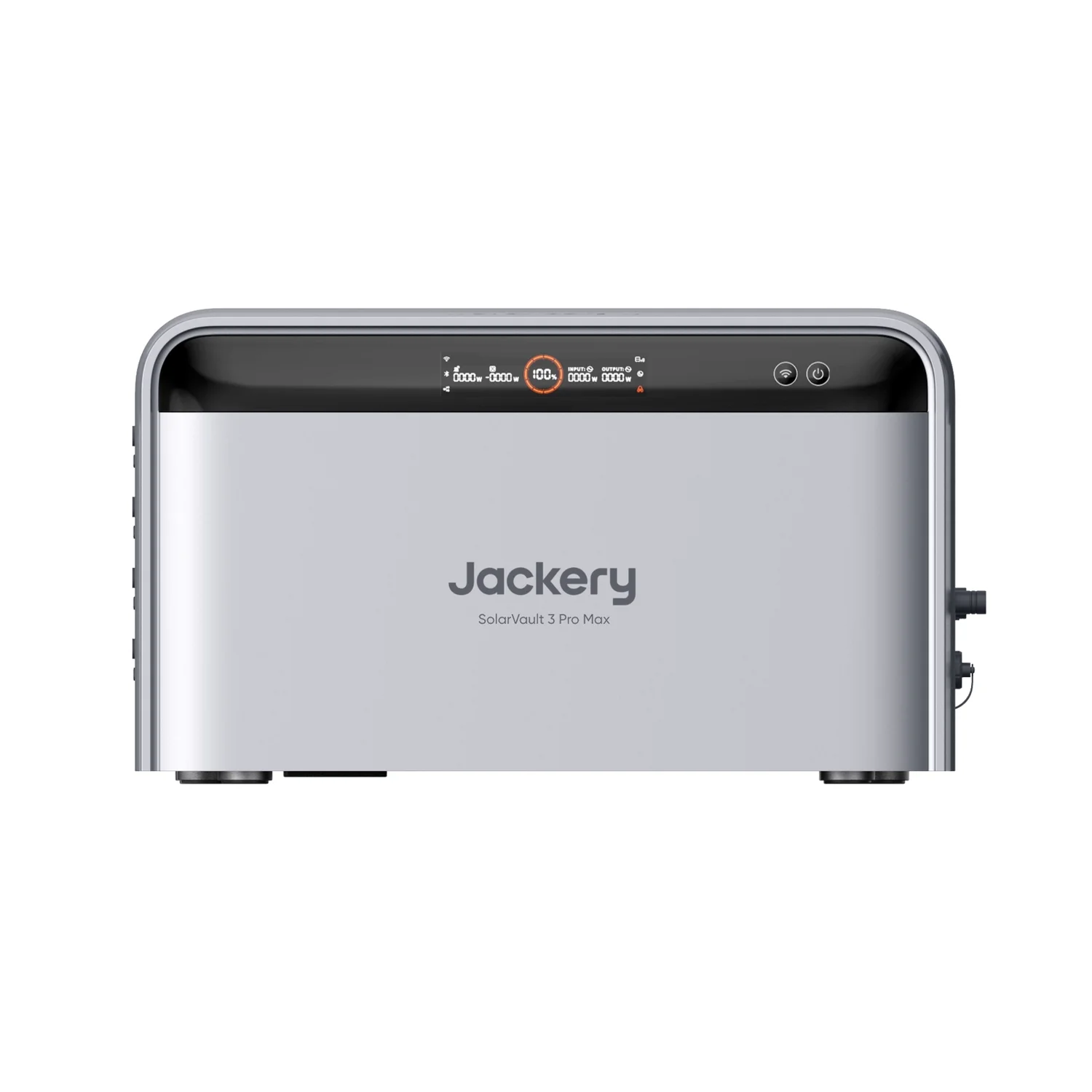

The differences that matter
- Solar input 4,000 W (4 MPPT) vs 1,500 W (2 MPPT) → the first takes a much larger array; above 1,500 W, extra panels add nothing on the second.
- Maximum charge 3.68 vs 1.2 kW → filling the battery from the grid in a cheap tariff window takes far less time on the first.
- Capacity 2.52 vs 1.92 kWh, expandable to 15.12 and 11.52 kWh → more energy in the base unit and a higher expansion ceiling.
- Weight 26.5 vs 21.1 kg → the second is easier to carry and mount.
Which one to choose
Choose Jackery SolarVault 3 Pro Max if…
you have more panels than a 1,500 W input can take, or want to charge from the grid on a time-of-use tariff at up to 3.68 kW. In an outage it supplies up to 1,600 W without a break (UPS). The trade-off is a 26.5 kg floor-standing unit that only runs in a reduced mode without internet.
Choose Zendure SolarFlow 800 Plus if…
1,500 W of panels is enough and you want a 21.1 kg unit with the inverter included and official Home Assistant integration. You accept a 1.2 kW maximum charge rate, no operation without internet, and the app being needed for first start-up.
Where to buy
Paid link: the price for you does not change.
As an Amazon Associate I earn from qualifying purchases.
The purchase links are the same as on the two product pages and don't influence the verdict. The product pages have the complete data.